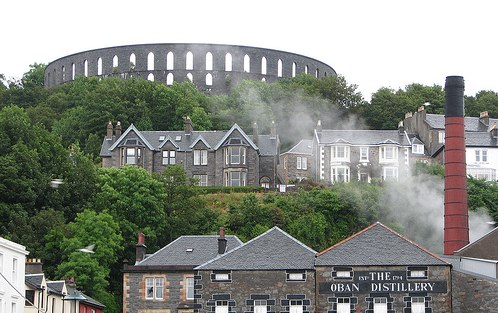
Clutch, of Dubber & Clutch, a scotch blog penned by a New Zealander (of Scottish descent) and a Scotsman (also of Scottish descent) who enjoy whisky and are keen that you do too; recently had an opportunity to visit Oban and shared their experience.
Over the course of the following hour and a half I was treated to my own private lesson in the art of distilling, from a man who could have easily been reading from a chemistry degree textbook, but who was as gracious with his explanations to the scientific layman that sat in front of him (myself) as he was with his generosity when it came to sending me on my way with a very special parting gift …
It’s a great story about the hospitality of Oban and their distillery manager, Kenny Gray, do check it out if you have a few spare moments.
General
Distillery Tour, Oban

Diageo Six Classic Malts of Scotland
In 1988, the United Distillers and Vintners began marketing the “Classic Malts of Scotland” as a selection of six single malt scotch whiskies that were representative of the best Scotch whiskey available. The United Distillers and Vintners was later purchased by Diageo, who has continued the marketing campaign. The “regions” in the six classic malts of Scotland differ from the official Scotch Whiskey Association region classifications, most likely so that they could include other scotches to the list of classics.
It’s not an official designation, just a marketing one. That doesn’t stop the six from being fine scotches though.
The six Classic Malts of Scotland are:
- Dalwhinnie 15 – Highland
- Talisker 10 – Isle of Skye
- Cragganmore 12 – Speyside
- Oban 14 – West Highland
- Lagavulin 16 – Islay
- Glenkinchie 12 – Lowland
As you can see, Isle of Skye (part of the Island subregion of the Highlands in the SWA’s official regions) isn’t an officially recognized region and Campbeltown, where Diageo does not own a distillery, isn’t represented on the list.
General
Cragganmore, Dalwhinnie, Diageo, Glenkinchie, Lagavulin, Marketing, Oban, Talisker