You’ll most often hear people talk about how they’re going to enjoy a dram of Scotch or pour themselves a wee dram, which is a unit of measure not often used in the United States. It usually refers to a “small amount” but it actually has a definition according to the U.S. Customary System. A US fluid dram is an eighth of a fluid ounce, 60 min (minim, about a drop) or around 3.7 mL of liquid. It is actually smaller than a teaspoon, which is measured as 80 min, so chances are someone is pouring themselves several drams of whisky.
My day job involves writing a personal finance blog and a message I’ve written repeatedly on that site is that you should start with the basics and work your way up. By this I mean that when you first start experiencing something, whether it’s your first dram of Scotch or your first investment, start with the basics. Start with something that is inexpensive, representative of the style, and work your way to the more luxurious items.
The perfect analogy is coffee. You can start with a cup of instant coffee or you spend $10,000 for a state of the art coffeemaker that will absolutely blow you away. The problem with starting at $10,000 is twofold:
What if you don’t like coffee? If that’s the case, you just wasted $10,000 on something that a $1 cup could’ve taught… that you don’t like coffee.
You won’t appreciate the coffee from the $10,000 as much as you would if you started drinking $1 cups of instant coffee and worked your way up.
So at the heart of this there’s a bit of frugality involved because you want to enjoy the things in life but you don’t want to spend all your money on just a few things. This extends perfectly into the enjoyment of Scotch, and other spirits, because you can’t appreciate just how good a dram is unless you’ve had a chance to start at the beginning.
So don’t run out and buy an 18-year or 25-year bottle, start with something from the lower end of the price spectrum so you know what you are getting for your money. You’ll learn to appreciate different aspects about a 10 year that you won’t get in a 25.
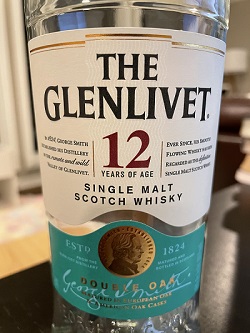
For example, I recently purchased a Glen Morangie 10 Year after a visit through Costco. Despite it’s seemingly younger age, it’s only slightly cheaper than a 12 year Glenlivet (I attribute that to production size), yet it’s a relatively smooth dram for not yet being a teenager.
Start with something cheap and slowly graduate yourself as you learn to appreciate.
Someone on twitter recently told me about the Glenlivet Scotch Tasting events hosted by Morton’s Steakhouse and how I should check it out. At first glance, it looks like a pretty decent event where you get to learn about properly tasting scotch and sample four of Glenlivet’s bottles – the 12, 15 (they don’t say if it’s the French Oak or the regular version), 16 and the 18. With the scotch there are served Hors d’oeuvres – Smoked Salmon Pinwheels, Sliced Tenderloin on Crostini, Whipped Horseradish; Broiled Sea Scallops, Apricot Chutney; and Petite Filet Mignon Sandwiches, Mustard Mayonnaise. Ticket price is $49, which includes tax and gratuity.
Without knowing how good the food is, the price is a bit high. The Celebrate the Macallan tasting event I went to in DC was free, though they overbooked and we didn’t get a chance to make it into the actual tasting. The food was OK and they gave us tickets to the next night’s Celebrate event (and glasses of the Macallan 18!), which was more than enough of a compensation.
I looked online and couldn’t find any reviews, just event listings for every Morton’s steakhouse location, but at first glance it seems like a lukewarm deal.
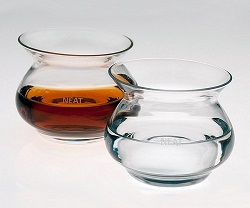
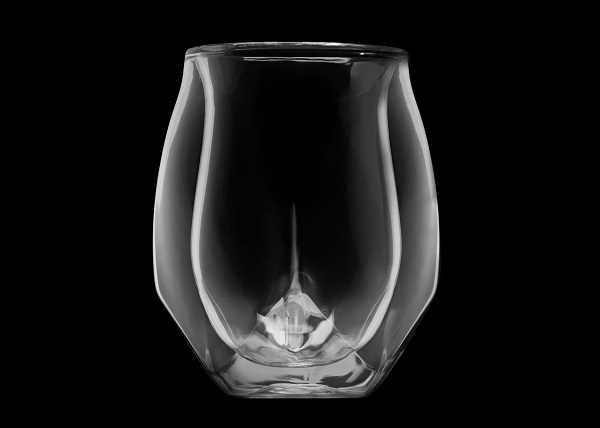
Luke at the Aspiring Gentleman takes a look at how your choice in glassware (or metalware, in the case of the flask) affects how a scotch tastes. In his experiment, he tries Scapa 14, Balvenie Doublewood, and Laphroaig in a flask, a shot glass, a tumbler, a wine glass, and a Glencairn glass, noting the differences in each. You can read part 1 here and part 2 here.
If you’re like me, your ability to buy scotch far outpaces your ability to drink it. Every time I go through Duty Free at Heathrow, I seem to leave with a handful of bottles and now I have at least a dozen I haven’t even opened yet! Fortunately, like wine, the rules for storing Scotch are simple and it is far less delicate than wine!
Avoid Light, Air, Heat
The enemies of Scotch, like its younger cousin beer, are light, air, and heat. The key to storing your Scotch so that it remains unchanged is to minimize its contact to all three:
Do you know how to pronounce Lagavulin? Glenfiddich? Glenmorangie?
If you know those, you’re in pretty good shape. How about Bruichladdich? Caol Ila?
Now, visit this website and play all the names. They have an audio file for a lot of distilleries (many of the majors, most of the smaller ones too) in both .wav and .au, though some are only in .au file format.
How many did you get right? If you got the pronunciation right did you accent the right syllable? Glenmorangie is easy to say but I bet you accent the wrong syllable like I did.
Learn how to pronounce scotch whisky names from an expert.
The scotch world has been abuzz all this month over the discovery of three crates of Scotch whisky (and two crates of brandy) underneath a hut of Ernest Shackleton in Antarctica. The amazing part about this whole story, I mean besides the fact that Shackleton’s expedition was in 1909 and besides the fact that they only expected to find two crates of whisky, is that while ice has cracked some of the crates, discoverers said they could hear the swishing of liquid inside. There is, in all likelihood, at least some of the whisky and brandy still left.
Richard Paterson, whose blog I read regularly (though recently it’s been a bunch of Twitter update posts), said that they could replicate that blend if they could analyze the bottles.
Here’s a video about the conservation efforts surrounding the huts themselves:
Very cool stuff. Paterson has said that the style of the day, for the “Rare and Old” whisky, was for it to be heavy and peaty. If they’re able to replicate it to their satisfaction, I’d love to give it a try. There’s something very fun and magical about going back through time like this, especially knowing that, at the moment, it cannot be accurately replicated!
If you’ve been to any business that produces a spirit, like a winery or a distillery, you’ll quickly learn that they all have one thing in common – they try to reuse whatever waste they can because it’s a smart business decision. Wineries take grape skins, stems, and seeds and use them as compost. Breweries and distilleries take their waste and resell it to other companies who turn it into feed.
It turns out that Bruichladdich is building an anaerobic digester to turn yeasty waste into methane gas, which can be burned for electricity! Bruichladdich is an Islay, which means it’s on the same small island as its more well known Islay bretheren – Ardbeg, Laphroaig, Lagavulin, … the list goes on. As is the case with islands, the waste needs to go somewhere and right now it’s being pumped into the Sound of Islay.
Each year, the distillery spends about $35,000 ferrying the waste to the pipeline for disposal and they’re going to replace it with a digester that could produce as much as 80% of the power the distiller needs. When you combine these savings with the renewable power credits, it’s a win win. It’ll take only 3-5 years to recoup the cost!
I only recently discovered the fine work of the The Sixteen Men of Tain in the form of Glenmorangie: The Original (their ten year expression) and was impressed by the depth of flavors. It stood up quite nicely against my “daily” dram of Glenlivet 12 (I don’t drink it daily… but I easily could!) and was comparably priced, so it was nice to discover something I could enjoy if I wanted a slight change of pace.
So this weekend, in a trip to New York, we stopped by Viscount Wines and Liqours with some friends to pick up wine for their wine tasting party. As they shopped for wine, i wandered over to the scotch section and took a look. I wasn’t specifically looking for Glenmorangie but when I saw the unmistakable amber box, I noticed there were several right beside it.
As it turns out, Glenmorangie has about half a dozen special finishes:
Lasanta – Finished in Spanish Oloroso sherry casks
Quinta Ruban – Finished in Portugese port pipes/casks
Nectar D’Or – Finished in Sauternes casks, Sauternes is a French dessert wine
Sonnalta PX – Finished in Pedro Ximenez Sherry casks
Astar – Matured entirely in “Artisan casks”
Several other distilleries offer finishes in sherry and port pipes, after years in a bourbon cask, but Glenmorangie is the first one I’ve seen that offers a version finished in Sauternes casks. (upon further research online, I see now that several distilleries offer Sauternes finishes)
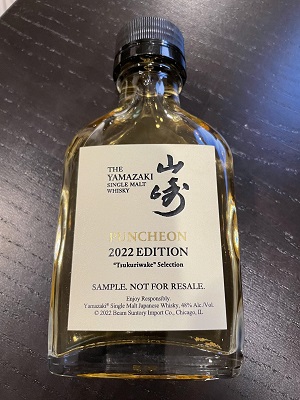
The WSJ has a fantastic article on Japanese Whisky that any whisky aficionado should read. It’s mostly on the state of Japanese whisky production, with looks at several several distilleries, three years after Nikka Whiskey Distilling Co’s 21-year old Takesuru Pure Malt secured the best blended malt awards at the Whisky magazine awards.
At almost every liquor store I’ve been to, there’s always been a bottle of Japanese whisky available and I’ve never had the opportunity to try it out. I think part of me is hesitant because it’s Japanese, whose whisky making tradition is but a toddler compared to the Scots. However, I think it’s fun to try something new so the next time I go to the store, I might take one home with me. One difference, which I’m eager to see how it affects the spirit, is that the distillation process is coal-fired, which is unique nowadays.
One thing that is the same… whisky in Japan is spelled without the E.